Sleek solar drones soar silently through thin air high above the Norwegian shore, collecting data that could fundamentally alter our understanding of climate systems. They can stay in the air for weeks without landing because their wings, which are covered in lightweight solar cells, efficiently convert sunlight into energy. Every drone is a flying laboratory, a living example of science driven by the natural world.
Under the direction of Agnar Sivertsen of NORCE Research, the project started out as a partnership between environmental scientists, engineers, and meteorologists who all had the same goal of unbounded observation. In order to monitor the invisible factors that determine weather, pollution, and climate change, they sought a system that could move with the sky and directly harness solar energy. Their goal, developing a solar drone that can both gather and understand data in real time, was amazingly successful.
The accuracy with which the drones are constructed is astounding. They weigh less than a small car tire, but they have a 12.5-meter wingspan. Every surface is designed to absorb sunlight as efficiently as possible. They glide on stored energy with little power drain at night and soar gently throughout the day, charging sophisticated lithium batteries. The design strikes a balance between agility and endurance, making it incredibly efficient.
They are like “digital albatrosses,” according to Sivertsen. The drones ride thermal currents, just like those fabled birds, and use optical and thermal sensors to monitor the skies for anything from methane emissions to the faint shimmer of soot in the upper atmosphere. Scientists can use the data they gather to track the movement of pollution across continents, such as how Asian black carbon can darken Arctic snow, speeding up ice melt and changing temperature trends.
Key Information: Project Lead and Research Overview
| Name | Agnar Sivertsen |
|---|---|
| Position | Senior Researcher and Project Manager |
| Institution | NORCE Research, Tromsø, Norway |
| Innovation | Solar-powered drone technology for climate data collection |
| Project Focus | Mapping pollution, tracking atmospheric soot, and improving weather forecasting |
| Collaborators | SkyTech eLab, Silesian University of Technology, and University of Warsaw |
| Reference | https://www.norceresearch.no |
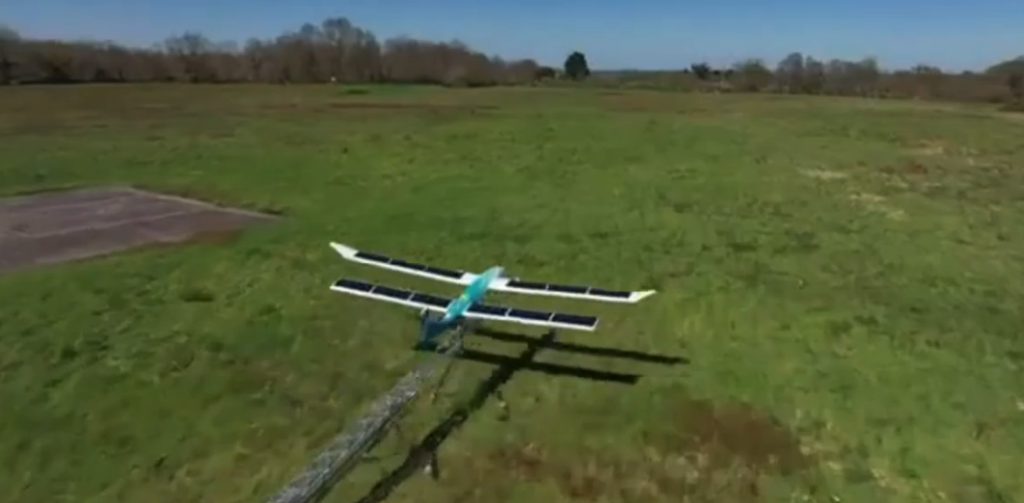
In the past, only weather balloons or satellites could do this type of research, but both had drawbacks. Satellites provide a far-off picture, frequently omitting the complex layers of the atmosphere, while balloons drift away and are lost after one journey. Drones that run on solar power fill that void. For thousands of kilometers, they can hover, circle, or follow wind streams, providing insightful information with remarkable clarity.
Tracking black carbon, the dark dust that accelerates global warming, is one of their most innovative accomplishments. According to Sivertsen, soot particles absorb heat “like a black shirt under the sun” when they settle on ice. This slight warmth causes melting to occur more quickly and interferes with snow’s inherent reflectivity. For the purpose of creating practical climate plans, these drones offer remarkably detailed data on the movement and location of these particles.
The drones are especially inventive because of their autonomy. They can assess flight conditions and change their course for improved coverage thanks to AI-driven navigation. They do not require pilots to give continuous orders, in contrast to conventional aircraft. An intuitively straightforward safety measure against accidents, the drone automatically returns to its starting place if contact with the base is lost.
LiDAR, multispectral cameras, gas analyzers, and artificial intelligence (AI) processors are among the many sensors that operate in concert inside each drone to convert imperceptible atmospheric changes into patterns that can be read. Real-time communication is managed by NORCE’s Cryocore system, which transmits data back to Warsaw and Tromsø. The accuracy of climate modeling has significantly increased as a result of hardware and software integration.
This project’s mindset is just as beautiful as its scientific results. It proves that cutting-edge technology and environmental consciousness may coexist harmoniously. These drones don’t emit any pollution and only need sunlight. They are literally the cleanest scientists in the sky.
The initiative is gaining international interest as Sivertsen’s team improves their work. Environmental organizations in Asia and Europe are already investigating the possibility of using fleets of these drones to track ocean pollution, glacier retreat, and deforestation. The technology is so adaptable that it can scan lush jungles and the icy Arctic with equal effectiveness.
While Pacific island governments see solar drones as tools for monitoring coral bleaching and increasing sea levels, African researchers envision them surveying areas that are prone to drought. Because of their versatility, drones are especially useful for tiny countries without the infrastructure needed for costly satellite programs. They can now obtain the type of environmental intelligence that was formerly exclusive to superpowers with comparatively little financial outlay.
These drones are having an impact on climate diplomacy in addition to science. The case for international climate financing and policy reform is strengthened by comprehensive atmospheric data. When advocating for more aggressive measures against industrial pollution, nations might cite concrete data collected by these devices. In this sense, the drones enable nations to demand change rather than just document it.
Climate activists and celebrities have also taken note. Solar-powered research initiatives have been hailed by celebrities like Leonardo DiCaprio and Greta Thunberg as concrete evidence that innovation can propel sustainability. Despite being symbolic, their endorsements highlight how crucial it is to combine technology with accountability. Essentially, the drones transform the abstract battle against climate change into something tangible, quantifiable, and very human.
However, there are always challenges in the way of advancement. Weather affects solar energy; cloudy skies can reduce output, particularly during arctic winters. under response, engineers have created extremely sensitive cells that can continue to function even under low light levels by absorbing energy from scattered light. The drones are incredibly dependable throughout the year because of their incredibly sturdy frames, which are designed to survive frigid temperatures and turbulence.
There are also regulatory obstacles. The management of autonomous vehicles capable of flying for weeks is still a learning process for airspace control organizations. To guarantee safe integration, Sivertsen’s team collaborates closely with aviation authorities; this is a laborious and accurate process. A permanent, self-sustaining network of aerial observatories is the reward, though, and it makes all the bureaucratic difficulties worthwhile.
The advantages are indisputable from an economic standpoint. Hundreds of weather balloons or several short-distance plane trips can be replaced with a single solar drone. They have a long lifespan and require little upkeep. When compared to satellite operations, this technology is surprisingly economical for nations with tight budgets. There are significant long-term savings in environmental management and data collection.