One of the few inventions that feels both rational and futuristic is solar roadways, a sophisticated response to the global demand for cleaner energy and more intelligent infrastructure. Embedding solar panels directly into road surfaces to produce sustainable energy while supporting automobiles is an incredibly straightforward yet incredibly ambitious idea. This idea transforms miles of asphalt into living, energy-producing systems by fusing pragmatism and creativity.
When Solar Roadways Inc., a firm in Idaho, pledged to transform regular roadways into self-powered grids, the idea caught off. LED illumination, ice-melting heating components, and intelligent sensors that could track traffic were all included in their panels. Because it represented something greater—the idea that innovation could be created right under our tires—the project attracted interest from all over the world. The company’s viral advertisement effectively demonstrated how roadways might speak with vehicles, produce energy, and illuminate themselves.
The French WattWay Project, created by the Colas Group, sparked a wave of excitement throughout Europe. The nation invested millions in a kilometer-long stretch of solar road in Normandy, believing it might power infrastructure and residences in the area. At first, the optimism was unusually strong. But after a few winters, such hopes were put to the test by reality. Heavy traffic caused damage, the panels quickly degraded, and maintenance expenses skyrocketed. Nearly 70% less energy was produced than anticipated. Later, the French Ministry of Energy referred to it as a “valuable experiment,” a tactful acknowledgement that failure is frequently the starting point for innovation.
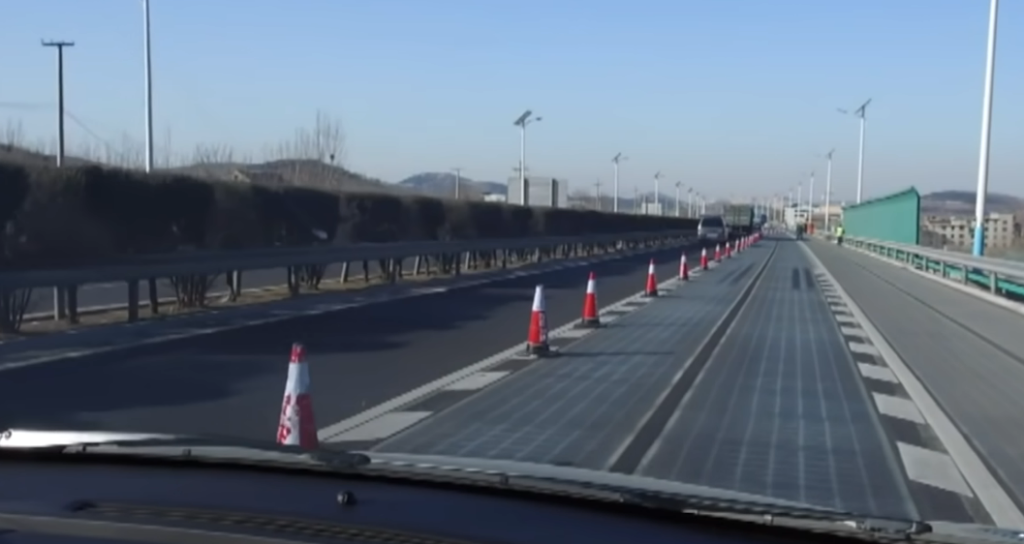
With the integration of three robust layers—insulation, photovoltaic cells, and transparent protective glass—China’s Jinan Solar Highway introduced new aspirations. According to engineers, it might provide enough energy each year to power hundreds of houses. However, a narrative about futuristic technology took an oddly personal turn when portions of the road were stolen just days after it opened. China’s experts have persisted in improving the concept in spite of this setback, hoping to produce an incredibly resilient surface that can tolerate traffic while retaining energy efficiency.
Key Information: Solar Road Development Highlights
| Project Name | Location | Developer | Key Feature | Outcome/Status | Reference |
|---|---|---|---|---|---|
| Solar Roadways Inc. | Idaho, USA | Solar Roadways Inc. | LED lighting, heating elements | Pilot stage, limited success | https://solarroadways.com |
| WattWay Project | Normandy, France | Colas Group | 1 km solar road section | Closed after 3 years due to wear | https://www.colas.com |
| Jinan Solar Highway | Shandong, China | Qilu Transportation | Three-layer design for vehicles | Partial operation | https://www.chinadaily.com.cn |
| Georgia Test Lane | Peachtree Corners, USA | WattWay/Curiosity Lab | Autonomous vehicle charging | Experimental success | https://curiositylabptc.com |
| Solar Bike Path | Krommenie, Netherlands | SolaRoad | First functional solar bike path | Ongoing operation | https://solaroadd.nl |
Through Peachtree Corners, Georgia, where a modest but symbolic solar lane was incorporated into a smart city project, the US once again entered the discussion. The road connects to networks for testing driverless vehicles and provides power for its own lamps. Despite its small size, this project showed how solar energy and urban planning can combine to produce extremely effective ecosystems that benefit locals on a regular basis.
In the meantime, the SolaRoad bike route in the Netherlands succeeded in achieving balance, something that larger projects found difficult. The engineers produced renewable energy while avoiding the burden of automobiles by concentrating on smaller-scale consumption. It turned into a superb proof of concept: solar infrastructure could function flawlessly in situations with less effect and control. Its success story is especially creative because it shows that solar integration doesn’t always need to start large in order to have an impact.
The benefits of solar roadways are useful and motivating. Countries might drastically cut down on the amount of land needed for solar farms by converting their current infrastructure into energy producers. Streetlights, traffic systems, and even neighboring neighborhoods might be powered by roads. In the winter, ice might be melted by embedded heating coils, improving travel safety. Painted lines could be replaced with LED lights that illuminate at night or change dynamically to alert people to dangers. Roads with integrated sensors may track wear, temperature, and traffic, resulting in a real-time, intelligent transportation network.
Solar roadways provide new opportunities for drivers of electric vehicles. Theoretically, induction-based technology may eventually enable automobiles to charge while they are in motion, completely removing range anxiety. Imagine roads that power cars continuously, which would significantly lessen the need for charging stations. Solar highways are more than simply a renewable energy notion; they offer a completely new way of thinking about mobility, and this idea, though still speculative, encapsulates what makes them so revolutionary.
However, there are still several difficulties. Instead than lying flat beneath heavy traffic, solar panels work best when tilted toward the sun. Shade, grease, and dirt can significantly lower energy production. Strong enough glass to support large cars often blocks some sunlight, which further lowers efficiency. Costs can be up to twenty times higher than those of traditional solar farms, making the economics just as challenging.
The worldwide appeal persists in spite of these obstacles. Every experiment yields learning that make the idea more feasible. The focus of some engineers is moving from fully embedded highways to solar canopies that cover parking lots or line roadsides. These designs supply renewable energy without compromising performance, and they are noticeably more cost-effective and maintenance-friendly. Additionally, they offer shade for cars, which is a little but incredibly useful advantage in reducing heat accumulation.
The relationship between solar highways and the development of smart cities is also a topic of growing discussion. Power-generating, traffic-sensing, and data-communicating infrastructure has the potential to completely transform metropolitan processes. Artificial intelligence and solar technology together have the potential to develop extremely effective, self-regulating transportation systems that react to changing circumstances. This integration may not be as far off as it seems; early prototypes already connect solar panels to adaptive lighting and dynamic traffic sensors in portions of Singapore and Japan.
The potential is huge from a societal standpoint. Without requiring more land, a single kilometer of operational solar road could power hundreds of homes or charge electric buses. Adoption on a large scale would improve energy independence, decentralize power grids, and significantly cut emissions. Solar roads could be especially helpful for underdeveloped nations, enabling areas to transition straight to sustainable architecture and bypass conventional energy infrastructure.
Additionally, the concept appeals to celebrity and cultural groups that support sustainability. Renewable innovation has long been promoted by celebrities like Elon Musk, Emma Watson, and Leonardo DiCaprio. Their impact raises awareness and encourages investment by maintaining public interest in initiatives like solar highways. Innovation that sparks the imagination leads to advancement. Whether it’s vertical farms or Tesla’s solar roof, the public’s obsession with green infrastructure helps transform once-radical concepts into workable reality.