The Maldives appear as a scattering of emerald pearls across the Indian Ocean on a map. However, this group of tiny islands, which was hitherto primarily recognized for its honeymoon spots, is now redefining itself as a leader in renewable energy. The Maldives, led by Environment, Climate Change, and Technology Minister Shauna Aminath, has accomplished what many larger countries are still disputing: using just solar to power half of its grid.
Diesel fuel accounted for nearly all of the nation’s energy for many years. Each island was powered by imported petroleum that was transported by boat; this system was expensive, unstable, and harmful to the environment. Every fan, every refrigerator, and every flicker of light relied on timely delivery of barrels of oil. These days, panels shining in the tropical sun are turning that reliance into resilience.
The change was not a coincidence; rather, it was a survival tactic motivated by both urgency and hope. The Maldives realized that sustainability wasn’t just a goal; it was a necessity as high seas threatened its low-lying islands. The nation discovered a workable method to safeguard its future by utilizing its most valuable natural resource, sunlight. This change is frequently referred to by Aminath as “turning vulnerability into power.”
This achievement can be attributed to a very inventive technology model. The Maldives created solar microgrids on individual islands rather than large centralized power plants. Each system enables uninterrupted electricity even after sunset by combining solar panels with cutting-edge battery storage. The strategy has been extremely successful in lowering carbon emissions, lowering fuel imports, and stabilizing costs for customers who previously had to deal with frequent swings.
| Name | Shauna Aminath |
|---|---|
| Profession | Minister for Environment, Climate Change and Technology |
| Country | Maldives |
| Policy Focus | Renewable energy transition and carbon neutrality by 2030 |
| Achievement | Leading initiatives that power nearly half of the Maldives’ energy grid with solar energy |
| Vision | To make the Maldives net-zero by 2030 through sustainable innovation |
| Reference | https://www.nytimes.com |
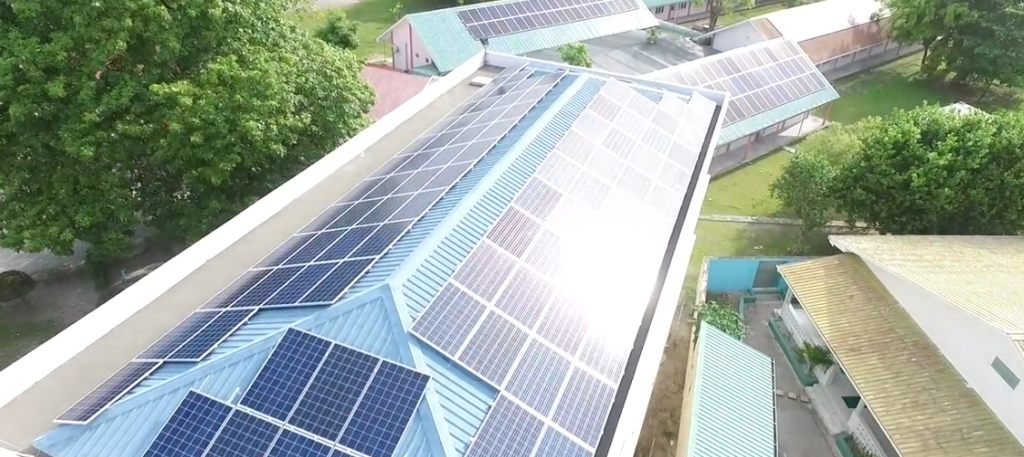
The most difficult challenge was financing such programs. The Maldives has a large national debt and has had trouble luring low-interest investment in the past. Small island states are frequently seen as hazardous borrowers by foreign lenders. When the World Bank intervened to fund important solar projects and took on the financial risks that private investors were afraid of, that all changed. The price of solar electricity dropped from 15 cents per kilowatt-hour to just 9.8 cents as a result, making renewable energy not only profitable but also clean.
There were repercussions from this financial invention. Private investors started vying for Maldivian project funding with lower costs and guaranteed profits. The nation swiftly expanded systems throughout its islands, saving about $20 million annually on fuel costs. A self-sustaining cycle of advancement is being created by rerouting these savings to programs related to healthcare, education, and climate adaption.
The Maldives’ floating solar farms are among its most striking architectural accomplishments. Engineers created solar panels that rest elegantly on lagoons because space is limited on many islands. The serene waters cool the panels, enhancing performance, in addition to reflecting sunlight for increased efficiency. The picture of solar panels drifting amongst coral reefs has come to represent contemporary sustainability—a tasteful fusion of nature and technology.
The change has significantly improved day-to-day living. There are now significantly fewer power interruptions for people living on the island of Malé. In distant atolls, hospitals function dependably without the noise and emissions of diesel generators, and kids may study for longer under solar-powered lighting. A new generation of engineers, electricians, and energy analysts who view the sun as more than just heat but also as opportunity has been trained as a result of the change.
National pride has changed culturally as a result of the energy shift. The Maldives, which was formerly thought of as a climate sufferer, is now seen as a climate leader. Small countries that feel overwhelmed by the bigger powers causing global emissions may find great inspiration in its story. Prominent individuals such as Emma Watson and Leonardo DiCaprio have praised its dedication to net-zero objectives, referring to it as a “proof of concept for what courage in policy looks like.”
The flexibility of the Maldivian strategy is what makes it so advantageous. The nation’s energy model is currently being researched and imitated in Southeast Asia and Africa. Similar solar microgrids are being adopted by local communities in Kenya and Nigeria to power farms, businesses, and schools in off-grid areas. These initiatives show that ingenuity and perseverance may be the foundation of innovation rather than a wealth of resources.
Aminath’s approach, however, extends beyond engineering. It has to do with rethinking finance. She contends that international financial systems must change to acknowledge climate investments as low-risk if small nations are to decarbonize. She has made a strong case for reform at international economic forums, emphasizing how high lending rates force developing nations to continue using fossil fuels. Among legislators advocating for fair access to green financing, her voice has grown to be one of the most respected.
The Maldives has one of the world’s most ambitious goals: net-zero emissions by 2030. It serves as a challenge and an invitation to demonstrate that effect is not based on scale. The country is demonstrating that development can be made with accuracy rather than scale by emphasizing battery technology, renewable infrastructure, and effective transportation.
Even the nation’s main source of income, luxury travel, is supporting this goal. Nowadays, a lot of resorts run solely on solar power, making sustainability a selling factor. Visitors are given the opportunity to observe energy meters and solar systems in operation, which is an incredibly successful way to combine leisure and awareness with environmental education. Some resorts even provide “carbon-neutral stays,” which let guests to fund solar expansion initiatives to make up for their carbon impact.
This transformation’s symbolism is what gives it its wider meaning. Industrial titans have dominated global climate discussions for decades. However, the smaller, frequently disregarded countries are producing noticeable outcomes. The Maldives has demonstrated that sustainable energy requires vision, organization, and perseverance rather than boundless land or capital.