Tokelau shines like a tiny but potent symbol of what sustainable energy independence may do in the Pacific’s dispersed blue. It started to change when PowerSmart, a New Zealand-based company supported by the New Zealand Aid Programme, set up a network of solar panels and batteries throughout the entire island. For the first time in human history, Tokelau has run solely on solar power since 2012. Its simplicity—4,032 solar panels, 1,344 batteries, and three islands that no longer require imported diesel—is what makes it most inspiring. The transformation affected Tokelau’s outlook on the future as well as how it produces power. Budgets are lighter, the sensation of ownership is stronger, and the air feels cleaner.
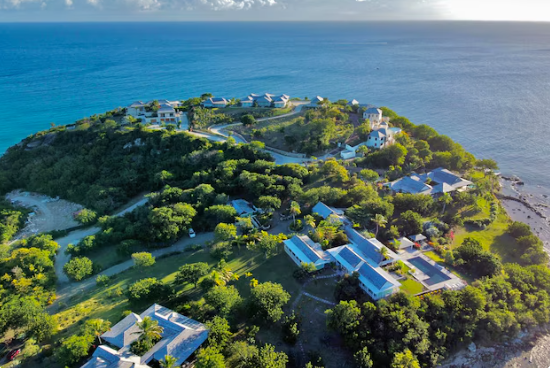
A remarkably comparable tale of community-driven invention can be found on the Danish island of Samsø, which is thousands of kilometers distant. Samsø set a lofty objective in the late 1990s: to become energy self-sufficient. Its 4,000 inhabitants now exist on an island that is totally reliant on biomass, solar, and wind electricity. The structure of the accomplishment is particularly evident because many of the turbines are owned by people. Their energy academy, a hub for education and cooperation, has grown to be a destination for sustainability specialists. Residents of Samsø transformed renewable energy from an environmental project into a community asset by sharing ownership. The idea has sparked hundreds of similar ventures throughout Europe, the profits remain local, and the pride is strong.
Key Details on Island Energy Independence
| Island/Project | Lead Organization/Partner | Renewable Technology Used | Energy Source Mix | Achievement/Goal | Reference |
|---|---|---|---|---|---|
| Tokelau (New Zealand Territory) | PowerSmart & NZ Aid Programme | Solar PV Arrays with Battery Storage | 100% Solar | Fully Solar-Powered Since 2012 | https://www.powersmartsolar.co.nz |
| Samsø, Denmark | Samsø Energy Academy & Local Cooperatives | Wind, Solar, Biomass Heating | 100% Renewable | Carbon-Neutral Since 2007 | https://energiakademiet.dk |
| El Hierro, Canary Islands | Gorona del Viento & Endesa (Enel Group) | Hydro-Wind Hybrid System | Wind + Hydro Storage | 100% Self-Sufficient at Intervals | https://www.endesa.com |
| Halki & Tilos, Greece | GR-ecoIslands Initiative | Solar Parks & Battery Storage | Solar + Wind | Energy Autonomy Achieved | https://gr-ecoislands.gov.gr |
| Samsø Model Expansion | EU Green Transition Partners | Decentralized Renewable Systems | Hybrid Renewables | Model Adopted Globally | https://ec.europa.eu |
El Hierro has adopted a separate but no less ambitious strategy further south in the Canary Islands of Spain. Under the management of Gorona del Viento, a business jointly owned by the energy behemoth Endesa and local government, the island is powered by a hybrid hydro-wind system that is exceptionally resilient and efficient. El Hierro uses extra wind power to pump water upward into a volcano crater, achieving 100% sustainable energy generation on certain windy days. That water flows back when the wind stops, producing hydroelectric power. This artistic and pragmatic circular process guarantees stability even in the face of natural fluctuations. It is adaptable, dependable, and incredibly sustainable, making it a model for islands everywhere.
Another tale of this continuous energy rebirth is told by the Greek Aegean islands of Halki and Tilos. The government-sponsored GR-ecoIslands initiative, which includes both islands, seeks to establish Greece as a pioneer in renewable island development. Residents of Halki can almost completely eliminate their electricity expenses thanks to a new solar park that powers homes and businesses. Local economies have significantly benefited from this change, with energy savings going back into infrastructure, tourism, and education. Tilos, on the other hand, used a combination of wind turbines, solar arrays, and cutting-edge battery storage to become the first island in the Mediterranean to achieve energy autonomy. Its technology is very inventive since sophisticated sensors dynamically distribute energy, guaranteeing steady stability even during periods of high tourist.
A common belief in independence is what ties all of these initiatives together. Every island makes advantage of its location as an opportunity rather than a constraint. They have shown that small towns may attain genuine energy independence, something that large nations still find difficult to accomplish, by utilizing wind, sun, and water. The advantages have been especially advantageous on several levels: far lower emissions, improved local economy, and cleaner air.
It is impossible to exaggerate how emotionally charged these endeavors are. On Samsø, the locals discuss energy independence as a way to be free from both the fear of volatility and fossil fuels. On Tokelau, kids grow up surrounded by the peaceful hum of solar inverters rather than the stench of diesel generators. Visitors are lured to El Hierro to witness an island that transforms organic rhythm into mechanical elegance. In each instance, sustainability is now a lived experience rather than an abstract policy.
These models are becoming more and more influential worldwide. Delegates from governments are studying them. Hawaii’s and Samoa’s microgrid logic is a major source of inspiration for Tesla’s solar and Powerwall initiatives there. Grants from the European Union are being used to help coastal towns replicate such hybrid systems. In order to emulate the resilience observed on islands like Tilos and El Hierro, even large corporations are taking note of the strategy and decentralizing their energy infrastructure.
The outcomes are quite successful financially. An estimated 80% of Tokelau’s yearly energy expenses were saved when it switched from diesel. Together, the people of Samsø have made money from their turbines, and Halki’s solar park has produced enough extra electricity to pay for city upgrades. These illustrations show that sustainability can be both an economic and environmental approach when handled wisely.
Initiatives supported by celebrities have also increased the momentum of this movement. Richard Branson’s “Ten Island Challenge” pushed governments to implement renewable infrastructure, while Leonardo DiCaprio’s organization has funded island resilience initiatives around the Caribbean. Their activism has brought projects that might otherwise go unnoticed to the attention of the world’s media. The focus has changed from survival to success; islands that were formerly reliant on outside assistance are now exporting technology, expertise, and hope.
The impact on society is especially apparent. These projects have improved neighborhood ties by decentralizing energy production. Accountability and pride are fostered by local ownership. Installation, maintenance, and education—industries that remain local rather than being outsourced—have seen job growth. It serves as a microcosm of what an equitable, resilient, and regenerative energy transition might entail globally.
The idea that progress necessitates scale is also contested by these projects. The islands demonstrate how intelligently connected local systems can function better than large centralized grids. They are demonstrating that creativity may sometimes originate on an island where every watt counts, every gust matters, and every sunrise has a purpose, rather than in megacities or labs.
These projects’ energy companies are creating more than just microgrids; they are creating trust. They have reinterpreted self-sufficiency, demonstrating that sustainability is about wise adaptation rather than drastic reduction. They have demonstrated what can happen when local will and technology work together by transforming entire islands into renewable ecosystems.