A sustainable future is frequently symbolized by solar panels. However, beneath their glossy exteriors is a series of procedures that, although incredibly efficient in producing energy, are incredibly resource-intensive to develop. Deep underground, in quartz mines that satisfy the demand for pure silicon, the component at the core of every photovoltaic cell, solar modules are first produced. Furnaces must reach extremely high temperatures in order to transform that silicon into the superior material required for panels, which uses enormous quantities of electricity.
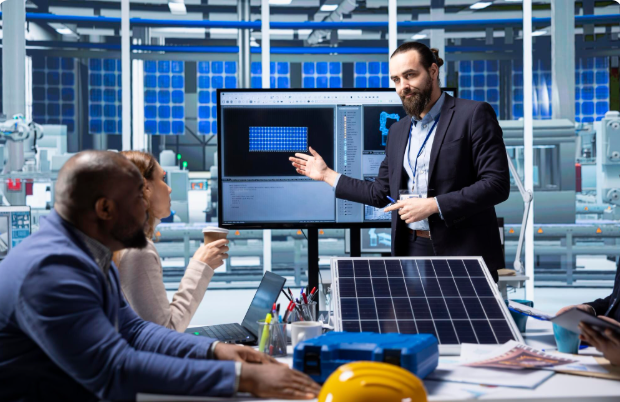
That electricity still mostly comes from coal in China, where the majority of solar panels are manufactured. The irony is especially stark: fossil fuels frequently gave rise to solar cells designed to replace them. It may take several years of clean operation to pay off the initial carbon debt from production. Despite this paradox, solar energy is still a crucial means of lowering global emissions—as long as the sector addresses its own environmental shadow.
Key Insights on Solar Manufacturing and Its Environmental Impact
| Category | Environmental Concern | Description | Impact | Reference |
|---|---|---|---|---|
| Energy Use | High Electricity Demand | Purifying silicon requires extremely high heat and vast energy input. | Increased CO₂ emissions during manufacturing. | https://www.iea.org |
| Water Consumption | Heavy Industrial Use | Processes like cutting and cleaning consume thousands of liters per unit. | Water scarcity in arid production zones. | https://www.epa.gov |
| Toxic Chemicals | Hazardous Substances | Hydrofluoric acid, lead, and cadmium used in production pose contamination risks. | Potential soil and groundwater pollution. | https://www.sciencedirect.com |
| Waste Management | Poor Recycling Capacity | End-of-life panels often contain toxic materials with limited recycling options. | Landfill contamination and metal leakage. | https://www.nrel.gov |
| Global Transport | Long Supply Chains | Panels and materials are shipped across continents. | Higher carbon emissions due to logistics. | https://www.energy.gov |
From raw material to completed panel, the process is extremely intricate and energy-intensive. Every stage requires heat, pressure, and complex chemical treatments, including silicon refinement, wafer slicing, chemical doping, and cell assembly. These phases emit greenhouse gases that are much more potent than carbon dioxide, such as nitrogen trifluoride and perfluorocarbons. Some manufacturers have promised to reduce these emissions in recent years, but regulation is still lax and inspection is inconsistent.
Additionally, water is crucial to the procedure. Amazingly large amounts of it are used in factories to eliminate microscopic dust, cool machinery, and clean wafers. This heavy water consumption conflicts with increasingly arid circumstances in areas like Xinjiang or Inner Mongolia, where numerous large-scale factories are located. It is hard to overlook the paradox that the deserts best suited for solar farms are also the least equipped to sustain water-intensive industries. For proponents of sustainability, managing that tension has been a constant issue.
The heavy reliance on hazardous chemicals is equally alarming. Although they are necessary for etching and coating panels, substances like hydrofluoric acid, nitric acid, and phosphine gas can be extremely dangerous if handled improperly. Groundwater can be contaminated for decades by a single accident or leak. When local fish died in large numbers as a result of trash from a nearby solar facility in 2011, a protest broke out in Zhejiang province. It was a sobering reminder that when precautions aren’t taken, even the greenest technologies can have negative environmental effects.
The extraction of copper, silver, and aluminum raises the price of solar energy by an additional, imperceptible layer. These metals come from energy-intensive mining processes that damage ecosystems and leave scars on landscapes, but they are essential for conductive layers and frames. Some businesses have started recycling aluminum scrap or replacing silver with copper-based conductors, which has significantly increased material efficiency. However, demand is rising as installations proliferate, and development is still unequal.
Another layer of emissions is added by the logistical chain once panels are manufactured. Before being exported throughout the world, the majority of modules are produced in Asia. Every consignment is transported by diesel-powered freighters over thousands of miles. Despite being small on their own, these logistics networks have a significant overall impact. Ironically, transportation powered by fossil fuels continues to play a major role in the clean energy economy.
The long-term problem that experts are starting to refer to as the “solar waste wave” follows. The initial generations of panels put in the early 2000s are already nearing retirement, and panels typically last 25 to 30 years. Many of these outdated modules wind up in landfills, where the cadmium and lead solder coatings run the risk of seeping into the ground. Although recycling is feasible, the lamination that joins silicon, plastic, and glass makes it more difficult. It takes time and money to safely separate those layers.
According to the International Renewable Energy Agency, there may be up to 80 million tons of solar waste produced worldwide by 2050. Considering that current recycling facilities can only manage a small portion of that quantity, it’s an astounding figure. By enforcing extended producer responsibility regulations under the WEEE Directive, which require producers to gather and recycle outdated panels, Europe has taken the lead. However, panels sometimes wind up stacked up or abandoned in nations without comparable laws, posing environmental risks that will beyond their usefulness.
Some businesses are advancing their solutions. One of the few extensive recycling systems that may recover up to 90% of a panel’s materials is run by First Solar, a US-based company. Their method, which combines chemical extraction and mechanical separation to recover glass and semiconductor components, is especially inventive. Such initiatives demonstrate that, with widespread adoption, circular production, which reuses materials instead of discarding them, can be both technologically and economically feasible.
However, the industry continues to face an unsettling paradox: older panels are being replaced earlier than anticipated as efficiency increases and costs decrease. What should be a 30-year product cycle is extended to a 10-year one since new models are so affordable, which encourages customers and utilities to update sooner. Waste is increased and recycling capacity is further taxed by this fast replacement pattern.
Companies and governments are now realizing this dilemma. Research on next-generation cells that use organic or perovskite materials—which might be made with considerably less energy and fewer harmful inputs—is being funded by some. Others are spending money on renewable electricity-powered furnaces with reduced emissions. Growing public awareness and regulatory pressure are driving the gradual but steady shift toward greener production.
Despite all of its shortcomings, solar energy is still a very adaptable and powerful tool in the fight against climate change. How solar energy can become more responsible is the question, not if it is sustainable. The entire life cycle, from mine to module to recycling plant, must be addressed for a future with genuinely clean energy. Every solar-powered panel ought to be a step in the direction of accountability and openness.