Because the outdated notion of roads as immobile, concrete arteries no longer meets the demands of contemporary urban life, cities are converting their highways into energy corridors. Numerous city planners characterize the change as being incredibly successful, emphasizing how steel and asphalt are being rethought as active surfaces as opposed to passive ones. This shift feels more dynamic because it integrates engineering, design, and climate policy into a single, coherent vision, but the urgency behind it is remarkably comparable to past campaigns for recycling, public transportation expansion, and zero-waste efforts.
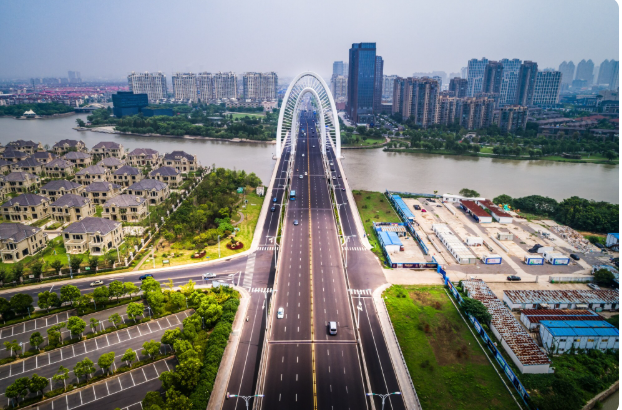
Cities started assessing the amount of land used by highways in recent years after understanding that, when combined with solar panels and micro-wind systems, these enormous expanses of tarmac may become surprisingly inexpensive power generators. Municipalities discovered that the same buildings constructed to convey automobiles decades ago might now generate electricity silently and cleanly by utilizing the tall surfaces of noise barriers or stretches of empty middle strips. For densely populated areas where every square meter matters, this concept has proven especially creative. Cheaper renewable technologies, which can be deployed much more quickly than traditional grid upgrades, have considerably improved the shift.
| Key Factor | Description |
|---|---|
| Renewable Energy Integration | Solar panels, wind turbines, and thermal systems placed along highways to generate clean power |
| Environmental Benefits | Reduced heat, better air quality, increased biodiversity, and lower noise levels |
| Economic Advantages | Energy savings, long-term cost reductions, and local job creation |
| Infrastructure Upgrades | EV charging stations, smart lighting, and digital systems powered by local renewable sources |
| Reference Link |
Since highways receive constant sunlight and provide broad, clear surfaces, solar power continues to be the focal point of these new corridors. In order to provide comfort and lessen the amount of heat absorbed by asphalt, several towns place panels atop canopies that shade passing vehicles. Others place panels along sound barriers in a vertical orientation. In certain experimental projects, commuters can literally stroll over a landscape that generates electricity by embedding photovoltaic materials into bike routes or pedestrian surfaces. Engineers highlight how extremely effective solar arrays may become when positioned in rhythmic, linear patterns along roadways, frequently drawing a comparison between the systems and a swarm of bees operating in synchronized configuration.
Another level of potential is added by wind power. Urban planners found that turbulence produced by air flow around cars can assist in turning small vertical-axis turbines. These turbines fit neatly on the light poles that currently line major roadways and are quite adaptable, performing well even at lower wind speeds. An incredibly apparent example of how roads may sustain themselves using renewable technology rather than depleting municipal budgets is the fact that certain pilot sites have already generated enough energy to pay the cost of lighting for entire interchanges.
Although it may seem odd, thermal infrastructure—the use of roads to trap heat—has become popular among communities looking to diversify their energy sources. Massive amounts of heat are absorbed by asphalt, and innovative technologies collect this heat through subterranean pipelines and direct it into adjacent structures or storage systems. That same stored energy may be utilized to keep roadways clear of ice during colder months, improving safety and drastically lowering winter maintenance expenses. Because of this dual function, thermal systems are especially useful in northern areas where icy roads pose constant risks.
One of the main reasons cities are adopting energy corridors is the environmental advantages. Although noise, pollution, and heat have always been linked to highways, contemporary designs aim to mitigate these consequences in extremely effective ways. Planting vertical plants alongside retaining walls can serve as a natural filter by capturing particulate matter and absorbing carbon dioxide. Certain districts in Medellín, Colombia, had temperature drops of up to two degrees Celsius as a result of the city’s green corridor effort; this difference was particularly appreciated during hotter seasons. Cities may restore biodiversity to places that were formerly dominated by concrete by incorporating plants into these areas, which also encourages the return of pollinators and tiny birds.
The effects on air quality are profoundly social as well as environmental. Enhancing air filtration with plants or algal panels is a particularly creative solution to address the higher rates of respiratory ailments that people who live close to highways frequently experience. Cities demonstrate their dedication to fair public health measures that go well beyond uniform emissions standards by combining these approaches.
Energy corridors provide significant financial incentives for sustained savings. Although renewable energy facilities are more expensive initially, they require less maintenance, and the capacity to produce electricity locally provides communities with a safety net against volatile fossil fuel markets. Some areas even intend to sell extra energy back to the grid, transforming highways from just expensive infrastructure into profit centers. Another crucial element is the creation of jobs, with new positions appearing in long-term maintenance, system monitoring, and installation. Unlike transient construction booms, renewable infrastructure demands constant upkeep, making this labor increase incredibly enduring.
The growing popularity of electric cars increases the urgency. EV adoption is predicted to increase dramatically in the upcoming years, placing a burden on established charging infrastructure unless new power sources become available. By installing solar panels and wind turbines on highways, transmission losses can be minimized and electricity can be produced exactly where it is required. A future where cars recharge while they travel is hinted at by cities’ exploration of possibilities like inductive charging embedded in road surfaces. This idea initially appeared ambitious but now feels especially novel given advancements in battery technology.
This change is also influenced by political and cultural variables. Some city officials take their cues from well-known proponents of renewable energy, like Elon Musk or Al Gore, pointing out that public lobbying has shown to be quite effective in persuading citizens that sustainable infrastructure is more than just a fad. In the meanwhile, cross-border cooperation has been incredibly successful, with cities exchanging data and initiatives to improve best practices. Similar to past international initiatives to upgrade public transportation or increase digital connectivity, the exchange of ideas promotes quicker progress.
Urban planners’ anecdotes show how local communities respond to these changes. One engineer recounted going to a community gathering where locals voiced doubts about solar panels on a freeway. However, opinions drastically changed after viewing preliminary test results and feeling the reduced temperatures close to a recently constructed green wall. These tales demonstrate how adoption can become more smooth as societal resistance lessens and observable advantages become apparent.
Cities view energy corridors as a strategic shift that is necessary for future resilience in light of the growing climate problems. While renewable technologies provide a stabilizing factor, traditional infrastructure has become outmoded due to rising temperatures, frequent storms, and strained power networks. Cities spread risk and build decentralized networks that can survive disruptions by directly integrating generation into highways.
Rapid progress is still being made. Poland and other nations investigate novel approaches to climate-specific adaptation of renewable energy sources, providing very transparent case studies that can be applied to areas with comparable seasons. These worldwide assessments show how adaptive and versatile the idea has grown, pointing to opportunities for global growth.